Australian Domestic Flight Reliability Analysis
Analyzed Australian domestic flight data to uncover cancellation patterns, seasonal disruptions, and airline reliability using Python, Pandas, and data visualization.
Australian Domestic Flight Reliability Analysis



Executive Summary
In the high-stakes world of aviation, reliability is currency. This project analyzes historical data from Australia's top 5 domestic flight routes to identify operational bottlenecks, seasonal disruption patterns, and airline performance benchmarks.
The goal is to provide data-driven recommendations for travelers and operational teams to minimize the impact of flight cancellations.
Key Business Insights
1. The "Winter Crunch" (Seasonality Analysis)
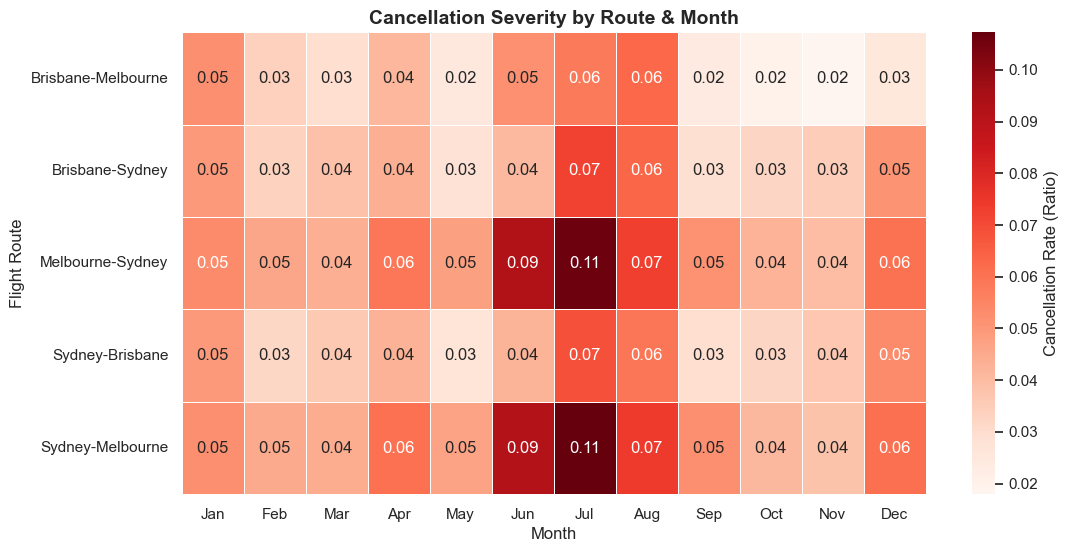
- Finding: Flight cancellations spike significantly during the Australian winter months (June & July).
- Impact: The Sydney ↔ Melbourne route is the most heavily affected, with cancellation rates reaching up to 11% due to weather conditions.
- Strategic Recommendation: Operational buffers (standby crews/aircraft) should be increased by 15% during Q2/Q3 on southern routes.
2. Airline Reliability Benchmarking
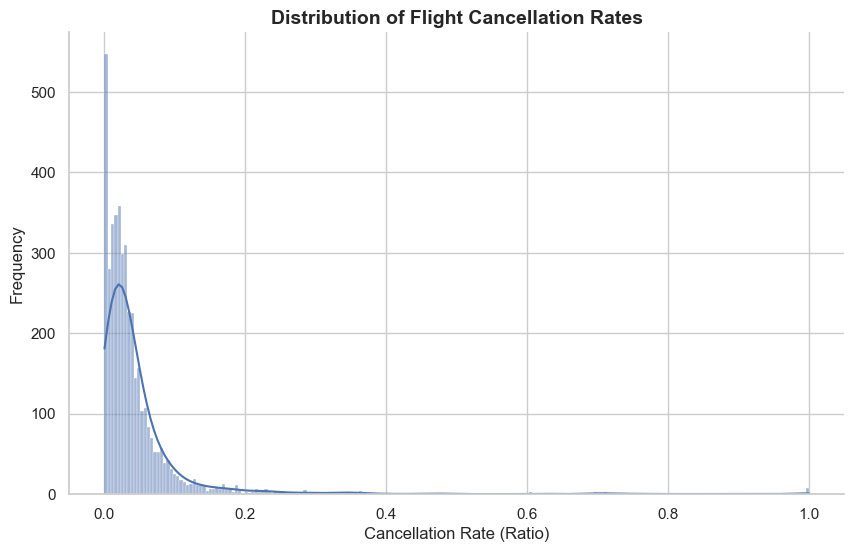
- Top Performers: Qantas and Virgin Australia demonstrate the highest stability with minimal variance in schedule adherence.
- High Variance: Jetstar and Tigerair show a wider spread in cancellation rates, indicating higher operational risk.
- Traveler Advice: For time-sensitive business travel, legacy carriers (Qantas/Virgin) are the statistically safer choice.
Visualizations
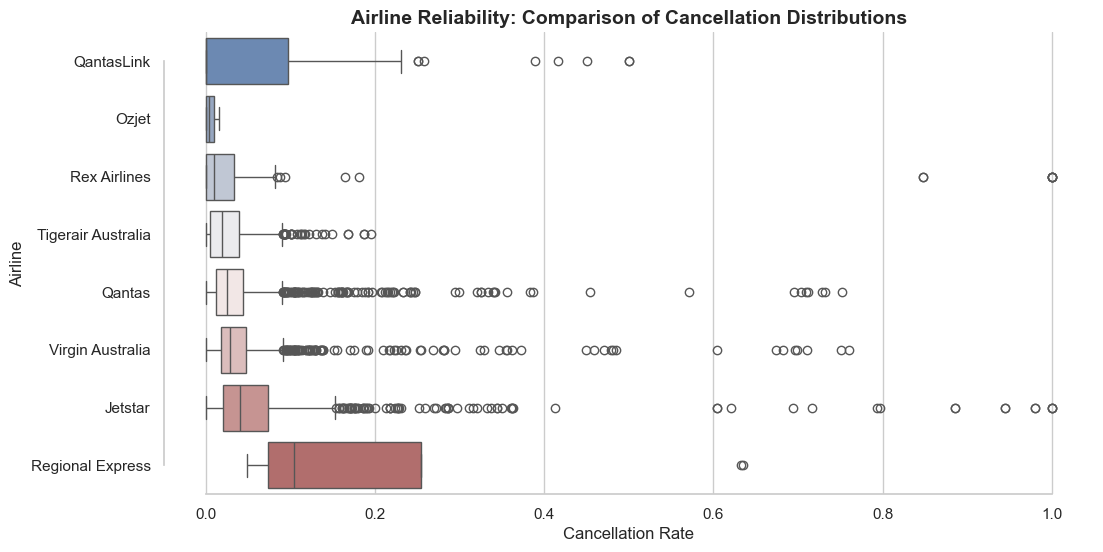
1. Cancellation Distribution
Most flights run smoothly, but the "long tail" of outliers reveals days of major disruption.
2. Airline Performance Comparison
A side-by-side comparison showing Qantas's stability vs. Jetstar's variability.
3. Heatmap of Disruption (Route vs. Month)
The "Red Zone" in June/July clearly marks the winter operational challenge.
Tech Stack & Methodology
- Python: Core programming language.
- Pandas: Data manipulation, pivot tables, and aggregation.
- Seaborn & Matplotlib: Advanced data visualization and statistical graphics.
- Jupyter Notebook: Interactive development environment.
Key Techniques Used:
- Data Cleaning & Preprocessing.
- Feature Engineering (Calculated
Cancellation_Rate). - Exploratory Data Analysis (EDA).
- Statistical Analysis (Distribution & Outlier Detection).
How to Run
- Clone the repository:
git clone [https://github.com/DiaaShousha/Australian-Flight-Reliability-Analysis.git](https://github.com/DiaaShousha/Australian-Flight-Reliability-Analysis.git) - Install dependencies:
pip install pandas seaborn matplotlib - Open the notebook:
jupyter notebook Australian_Flight_Reliability_Analysis.ipynb
Author
Diaa Shousha
- Role: Data Analyst & AI Engineer
- Focus: Turning raw data into strategic business stories.
- LinkedIn Profile